
Keynotes
Discrete Digital Hydraulic Servo Control Technology
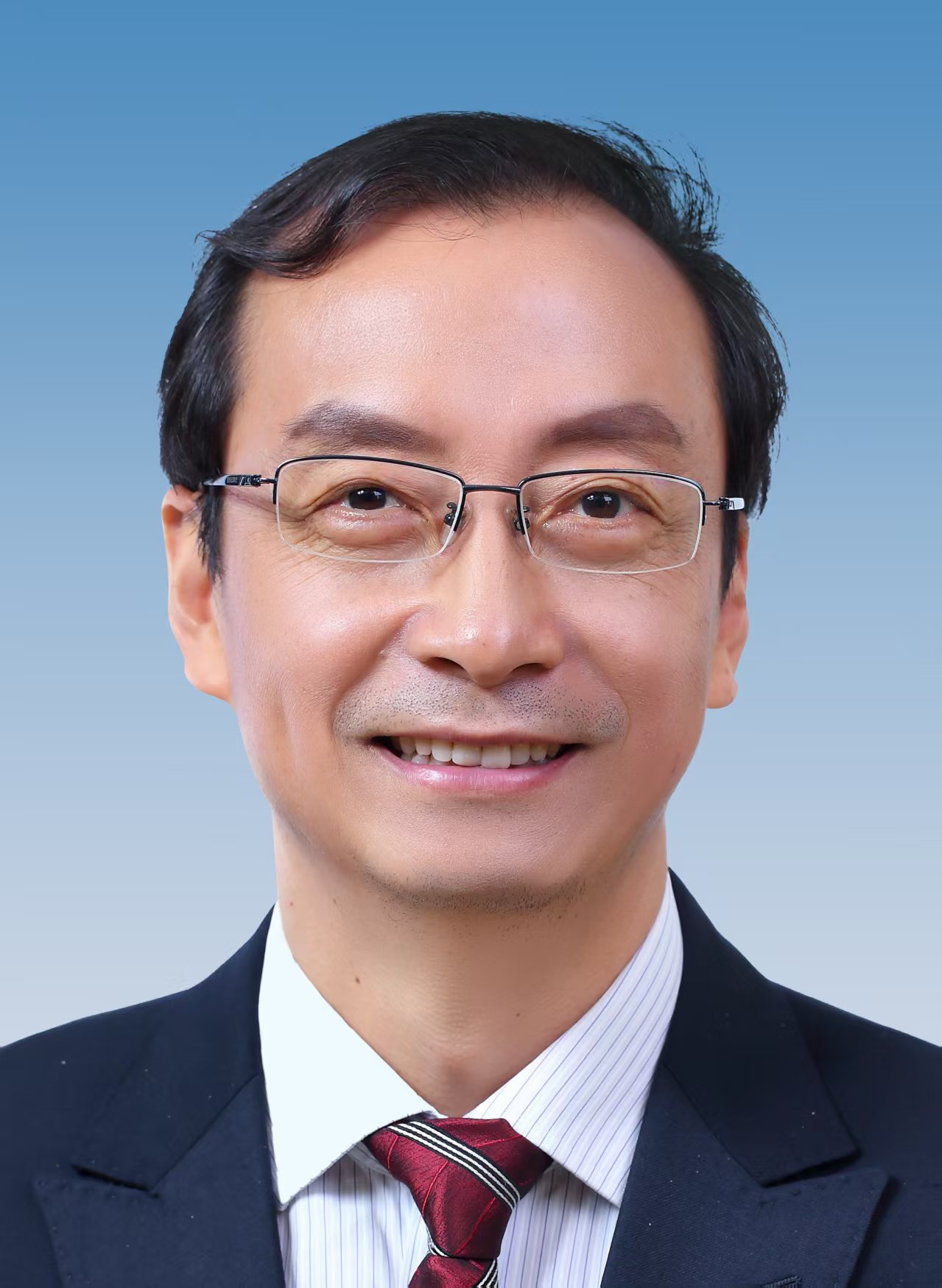 |
Prof. Zongxia Jiao Beihang University, China |
Abstract
Electrohydraulic servo systems play a critical role in the aviation field and are widely used in key subsystems such as flight control, braking systems and nose wheel steering systems, directly affecting the safety and reliability of aircraft operations. However, current aviation electrohydraulic servo systems commonly rely on high-precision servo valves that feature extremely fine internal structures and vulnerability towards oil contamination, suffering from relatively low reliability, and require complex manufacturing, assembly, and calibration processes. Discrete digital hydraulics has emerged as a novel servo control technology. Owing to its advantages including simpler and more robust components, higher system flexibility, and inherent fault-tolerant capability, it has the potential to fundamentally overcome the limitations of conventional servo valves and provide a new feasible method for high-reliability hydraulic servo control in aviation applications.
Our research group has been devoted to the development of discrete digital hydraulic technologies through a systematic innovation framework encompassing new components, new control methods, and new system architectures. We have successfully developed miniature dual-driven high-speed on/off valves, achieved breakthrough in high-precision control strategies based on multi-layer discrete variable gain modulation, and designed several discrete digital hydraulic control architectures. These achievements have been applied and have yielded remarkable results, significantly enhancing the reliability and safety of aviation equipment.
Biography
Zongxia Jiao
, an academician of the Chinese Academy of Engineering, is a professor at the School of Automation Science and Electrical Engineering of Beihang University and director of the Beihang Airborne Systems Innovation Center. He serves as director of the National Key Laboratory of Integrated Aircraft Control, executive director of the Chinese Society of Aeronautics and Astronautics as well as honorary director of its Electromechanical Systems Branch, and executive director of the Chinese Mechanical Engineering Society as well as director of its Fluid Power Transmission and Control Branch. He is also editor-in-chief of both the Chinese and English versions of the Chinese Journal of Aeronautics.
He has long been engaged in research on aeronautical airborne electromechanical systems and flight control systems. His original contributions span electromechanical-hydraulic control theory, core fundamental components, novel-concept aircraft, and advanced testing equipment. He has systematically addressed critical challenges in high-reliability aircraft hydraulics, high-safety braking systems, servo actuation, and aircraft testing, with his achievements applied to multiple major aviation and aerospace projects. He has been named a Highly Cited Researcher by Elsevier for five consecutive years and has received the Ho Leung Ho Lee Prize and the National Medal for Innovation and Dedication. Additionally, he has been awarded two National Technology Invention Awards (Second Class) and one National Scientific and Technological Progress Award (Second Class).
Resilience in Multi-Agent Systems: From Fault Diagnosis to Tolerant Control and Toward a Game-Theoretic Framework
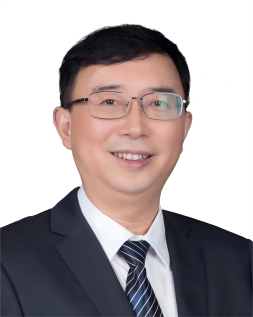 |
Prof. Bin Jiang Nanjing University of Aeronautics and Astronautics, China |
Abstract
In recent years, the growing complexity of multi-agent systems has made them increasingly susceptible to operational faults spanning both individual agent failures and communication disruptions, which directly compromise system stability and safety. Consequently, the demand for resilient multi-agent systems has intensified, driving significant research attention toward integrated fault diagnosis and fault-tolerant control. This talk presents a unified framework for achieving resilience through fault diagnosis, fault-tolerant control and fault-tolerant game control. The fault diagnosis module introduces a distributed nonlinear fault diagnosis design, enhanced by an event-triggered mechanism to improve efficiency and reduce communication load. In the fault-tolerant control module, theoretical advances are synthesized from fully actuated system theory, adaptive methods, and prescribed performance control, enabling robust recovery and sustained cooperation under faults. To further achieve the stability and optimal performance of multi-agent systems, the fault-tolerant game control is developed. Above results are applied to both homogeneous and heterogeneous multi-agent systems, with experimental validation provided through cooperative fault-tolerant control demonstrations in actual unmanned formation platforms.
Biography
Bin Jiang
received the Ph.D. degree in automatic control from Northeastern University, Shenyang, China. He had ever been a Post-Doctoral Fellow, a Research Fellow, an invited Professor, and a Visiting Professor in Singapore, France, USA, and Canada respectively.
He is currently the President of the Nanjing University of Aeronautics and Astronautics,Nanjing, China, and a Chair Professor of the Cheung Kong Scholar Program with the Ministry of Education, He has authored 8 books and over 100 referred international journal articles. His current research interests include intelligent fault diagnosis, fault-tolerant control and their applications to helicopters, satellites, and high-speed trains. He was a recipient of the National Natural Science Award of China. He is an lEEE Fellow, a Fellow of the Asia-Pacific Artificial Intelligence Association (AAlA), a Fellow of the Chinese Association of Automation (CAA), the Chair of Control Systems Chapter in lEEE Nanjing Section, and a member of IFAC Technical Committee on Fault Detection, Supervision, and Safety of Technical Processes. He currently serves as a Senior Editor for International journal of Control, Automation and Systems, and an Associate Editor or an Editorial Board Member for several journals, such as the lEEE Transactions on Cybernetics, lEEE Transactions on Neural Networks and Learning Systems, and lEEE Transactions on Industrial Informatics.
Physics-informed learning and control of mixed-autonomy traffic
 |
Prof. Karl Henrik Johansson KTH Royal Institute of Technology, Sweden |
Abstract
Road infrastructure remains significantly underutilized in current traffic systems. Mixed-autonomy traffic, where connected and automated vehicles (CAVs) interact with human-driven vehicles, offers a unique opportunity to improve system-level efficiency, resilience, and safety. In this context, CAVs can be leveraged not only as transportation agents but also as distributed sensors and actuators, enabling real-time state estimation and feedback control of large-scale traffic networks. This presentation introduces a physics-informed learning and control framework for mixed-autonomy traffic systems. By embedding traffic flow dynamics into machine learning models, we develop structured, data-efficient representations that generalize across operating conditions while preserving physical consistency. These models enable the design of scalable feedback control strategies that proactively mitigate congestion and respond to disturbances under uncertainty. We provide a comparative analysis of model architectures from a control perspective, highlighting trade-offs in expressiveness, interpretability, and robustness. Furthermore, we address the challenges of human–automation interaction by integrating formal safety guarantees into the control design and by incorporating teleoperation as a supervisory fallback mechanism in safety-critical scenarios. The proposed framework is validated through extensive real-world demonstrations conducted in collaboration with Swedish industry partners, illustrating its potential for deployment in next-generation intelligent transportation systems.
Biography
Karl H. Johansson is Swedish Research Council Distinguished Professor in Electrical Engineering and Computer Science at KTH Royal Institute of Technology in Sweden and Founding Director of Digital Futures. He earned his MSc degree in Electrical Engineering and PhD in Automatic Control from Lund University. He has held visiting positions at UC Berkeley, Caltech, NTU and other institutions. His research interests focus on networked control systems and cyber-physical systems with applications in transportation, energy, and automation networks. For his scientific contributions, he has received numerous best paper awards and various other distinctions from IEEE, IFAC, and other organizations. He has been awarded Distinguished Professor by the Swedish Research Council, Wallenberg Scholar by the Knut and Alice Wallenberg Foundation, Future Research Leader by the Swedish Foundation for Strategic Research. He has also received the triennial IFAC Young Author Prize, IEEE CSS Distinguished Lecturer, IFAC Outstanding Service Award, and IEEE CSS Hendrik W. Bode Lecture Prize. His extensive service to the academic community includes being President of the European Control Association, IEEE CSS Vice President, and Member of IEEE CSS Board of Governors and IFAC Council. He has served on the editorial boards of Automatica, IEEE TAC, IEEE TCNS and many other journals. He has also been a member of the Swedish Scientific Council for Natural Sciences and Engineering Sciences. He is Fellow of both the IEEE and the Royal Swedish Academy of Engineering Sciences.
MAD Games: Multi-Agent Dynamic Games - Lessons from the Limits of Autonomous Racing
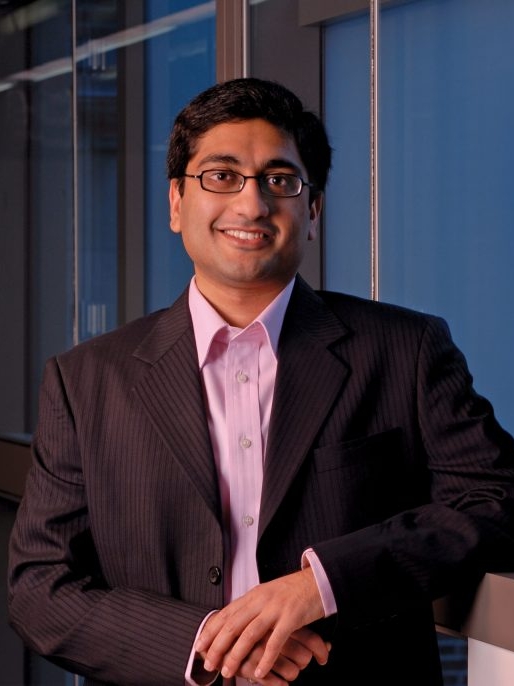 |
Prof. Rahul Mangharam University of Pennsylvania, USA |
Abstract
The critical challenge in deploying autonomous systems is achieving peak performance without compromising safety. Autonomous racing crystallizes this challenge, as it punishes timid policies and demands robust, adaptive strategies in multi-agent settings. Current approaches often fail by either oversimplifying the behavior of other agents or lacking mechanisms for real-time adaptation.
This talk presents research that pushes the boundaries of perception, planning, and control. We will explore how to develop highly competitive agents through:
Adversarial Training: Leveraging game theory and distributionally robust online adaptation to create agents that dynamically balance safety and assertiveness.
Adaptive Safety: Using conformal prediction, control barrier function and imitation learning we show how multiple imperfect experts train an AI to perform better than any single expert.
Safe MPC Frameworks: Implementing iterative control strategies for nonlinear stochastic systems to handle constrained, real-world uncertainty.
All research is implemented on our RoboRacer.ai platform—1/10th the size, but 10x the fun. The key takeaway is a deeper understanding of how to build and validate safe autonomous systems for complex, interactive environments.
Biography
Rahul Mangharam
is Professor of Electrical & Systems Engineering and Computer & Information Science at the University of Pennsylvania. His research is on Trustworthy AI for safe autonomous systems. His work bridges formal methods, machine learning, and control theory to create provably safe systems for applications including autonomous vehicles, urban air mobility, and life-critical medical devices.
For his contributions to life-critical systems, he received the Presidential Early Career Award for Scientists and Engineers (PECASE) from President Obama. His work has also been recognized with the NSF CAREER Award, the Intel Early Faculty Career Award, IEEE Benjamin Franklin Key Award, multiple best paper awards from ACM and IEEE, and selection to the National Academy of Engineering's US Frontiers of Engineering.
Dr. Mangharam serves as the Penn Director for the $20 million Safety21 National University Transportation Center, a US Department of Transportation center for safe and efficient mobility. He also directs the Autoware Center of Excellence, an open-source autonomous driving consortium of over 33 academic partners, and is the founder of the RoboRacer/F1TENTH Autonomous Racing Community, now active in over 90 universities worldwide.


