
Distinguished Lectures
Distributed Learning/Optimization algorithms with approximate Newton-type methods
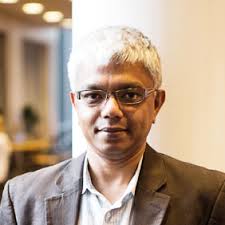 |
Prof. Subhrakanti Dey Uppsala University, Sweden |
Abstract
In this talk, we will consider the problem of distributed multi-agent learning, where the global aim is to minimize a sum of local objective (empirical loss) functions through local optimization and information exchange between neighbouring nodes. We introduce a Newton-type fully distributed optimization algorithm, Network-GIANT, which is based on GIANT, a Federated learning algorithm that relies on a centralized parameter server. The Network-GIANT algorithm is designed via a combination of gradient-tracking and a Newton-type iterative algorithm at each node with consensus-based averaging of local gradient and Newton updates. The resulting algorithm is efficient in terms of both communication cost and run-time, making it suitable for wireless networks. We prove that our algorithm guarantees global exponential convergence (also known as linear convergence) to the exact global optimum over the network for strongly convex and smooth loss functions. We also illustrate how Network-GIANT can achieve a faster local linear convergence rate asymptotically as the iterates get closer to the optimum. Recent extensions to compressed information transmission and accelerated (heavy-ball type) versions of Network-GIANT will also be discussed. Numerical studies show superior convergence performance of Network-GIANT and its extensions with compression or acceleration, over other state-of-the-art distributed learning algorithms and their corresponding counterparts with compression or acceleration.
Biography
Subhrakanti Dey
received the Ph.D. degree from the Department of Systems Engineering, Research School of Information Sciences and Engineering, Australian National University, Canberra, in 1996.
He is currently a Professor and Head of the Signals and Systems division in the Dept of Electrical Engineering at Uppsala University, Sweden. He has also held professorial positions at NUI Maynooth, Ireland and University of Melbourne, Australia. His current research interests include networked control systems, distributed machine learning and optimization, and cyber-physical security. He is a Senior Editor for IEEE Transactions of Control of Network Systems and IEEE Control Systems Letters, and an Associate Editor for Automatica. He is a Fellow of the IEEE.
Encoders for Simultaneous Sensing of Position and Speed – A Bottleneck in Electrical Drives with Digital Control
 |
Prof. Ralph Kennel Technische Universität München, Germany |
Abstract
In the beginning of this century there have been publications explaining the technical requirements of encoders to be used in electrical drives with digital control. The main statement of these papers have been that neither high resolution resolvers nor high resolution optical encoders really do provide features as good as of analogue tacho generators. The performance of servo drives with digital control, however, has improved in com¬parison to former drives with analogue control. Neverthe¬less the speed detection performance of optical encoders still can¬not cope with high precision tacho generators - they still are the technical bottle neck for further improvements in digi¬tal drive control. This keynote reports on the real requirements for encoders in electrical drives with digital control. Several exoisting technologies as well as some future oriented developments are compared with these requirements.
Biography
Ralph M. Kennel
was born in 1955 at Kaiserslautern (Germany). In 1979 he got his diploma degree and in 1984 his Dr.-Ing. (Ph.D.) degree from the University of Kaiserslautern.
From 1983 to 1999 he worked on several positions with Robert BOSCH GmbH (Germany). Until 1997 he was responsible for the development of servo drives. Dr. Kennel was one of the main supporters of VECON and SERCOS interface, two multi-company development projects for a microcontroller and a digital interface especially dedicated to servo drives. Furthermore he took actively part in the definition and release of new standards with respect to CE marking for servo drives.
Between 1997 and 1999 Dr. Kennel was responsible for "Advanced and Product Development of Fractional Horsepower Motors" in automotive applications. His main activity was preparing the introduction of brushless drive concepts to the automotive market.
From 1994 to 1999 Dr. Kennel was appointed Visiting Professor at the University of Newcastle-upon-Tyne (England, UK). From 1999 - 2008 he was Professor for Electrical Machines and Drives at Wuppertal University (Germany). Since 2008 until his retirement in 2022 he was Professor for Electrical Drive systems and Power Electronics at Technische Universitaet Muenchen (Germany). His main interests are: Sensorless control of AC drives, predictive control of power electronics and contactless energy transmission.
Dr. Kennel is a Senior Member of IEEE, a Fellow of IET (former IEE) and a Chartered Engineer in the UK. Within IEEE he is Treasurer of the Germany Section – furthermore he has been Distinguished Lecturer of the Power Electronics Society (IEEE-PELS) as well as Vice President Meetings of the same society.
In 2018 Dr. Kennel received the Doctoral degree honoris causa from Universitatea Stefan cel Mare in Suceava (Romania).
Dr. Kennel has received in 2013 the Harry Owen Distinguished Service Award from IEEE-PELS, the EPE Association Distinguished Service Award in 2015 as well as the EPE Outstanding Achievement Award in 2019.
Dr. Kennel was appointed “Extraordinary Professor” by the University of Stellenbosch (South Africa) from 2016 to 2019 and as “Visiting Professor” at the Haixi Institute by the Chinese Academy of Sciences from 2016 to 2021. There he was appointed as "Jiaxi Lu Overseas Guest Professor" in 2017. In 2018 Dr. Kennel was appointed Guest Professor at Harbin Institute of Technology (HIT), Harbin, China. In 2019 Dr. Kennel was appointed „Honorary Chair Professor“ ("distinguished visiting professor") at Shandong University in Jinan, China.
Research on Decentralized Control Methods for Uncertain Nonlinear Interconnected Large-Scale Systems
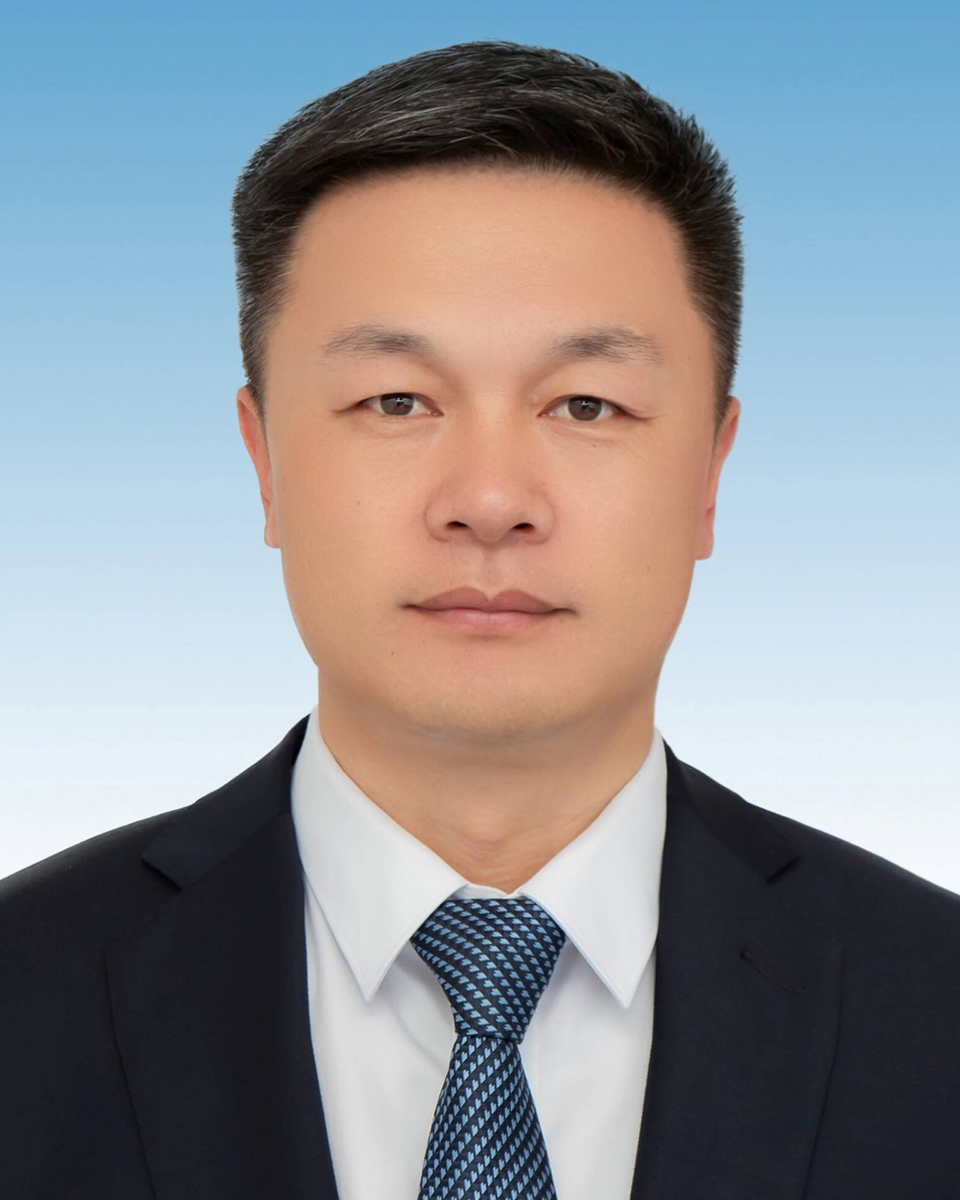 |
Prof. Yongming Li Liaoning University of Technology, China |
Abstract
Practical engineering control systems, such as aerospace systems, robot systems, and chemical process systems, are increasingly exhibiting comprehensive characteristics such as high nonlinearity, large-scale, uncertainty, multi variability, and strong coupling. This poses a challenge to traditional centralized control theories and methods. Distributed control fundamentally solves the bottlenecks of large-scale complex systems in terms of information, computation, and reliability through local autonomy and limited coordination. Therefore, decentralized control of uncertain nonlinear interconnected large-scale systems has become one of the core control methods for dealing with modern complex engineering systems. This report focuses on the design method of decentralized controllers for typical uncertain nonlinear interconnected large-scale systems, as well as the proof of stability, convergence, and robustness of the control system.
Biography
Yongming Li , Professor, Doctoral Supervisor, Vice President of Liaoning University of Technology, expert enjoying the Special Government Allowance of the State Council, and recipient of Category A and B Projects of the Youth Science Fund of the National Natural Science Foundation of China, whose research direction is Theory and Application of Intelligent Control, has presided over more than 20 national and provincial-level projects including the Joint Key Project of the National Natural Science Foundation of China, projects under the National Key R&D Program, and Major Projects of the "Tendering for Talents to Solve Key Problems" of Liaoning Province, published more than 100 papers, been granted more than 20 invention patents and software copyrights, published 4 textbooks and monographs, and won the First Prize in Natural Science of the Ministry of Education, the Second Prize in Natural Science of Liaoning Province, as well as the First Prize in Technological Progress of the Chinese Association of Automation.
Interconnected-System Approaches to Nonlinear Control
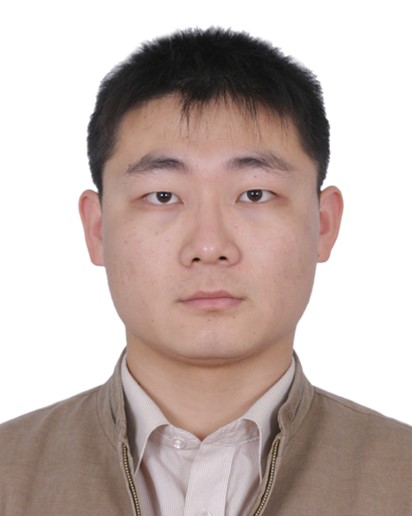 |
Prof. Tengfei Liu Northeastern University, China |
Abstract
Nonlinear dynamics and networked interconnections are fundamental sources of system complexity and central considerations in achieving global, high-performance control across diverse systems. As control methodologies for individual systems and devices have become increasingly mature, and as sensing, communication, and computing technologies continue to advance, it is becoming increasingly feasible, and often necessary, for multiple controlled systems to coordinate through physical coupling or information exchange. Nevertheless, nonlinear dynamics and networked interconnections remain the primary challenges in realizing such coordinated control. Building on several representative control problems studied over the past two decades, including event-triggered control, feedback-based optimization control, and constraint-satisfaction control, this talk investigates how interconnections shape the closed-loop nonlinear dynamics of complex systems. Based on these insights, new analytical and design tools are developed to address emerging challenges in the cooperative optimization and control of networked nonlinear systems.
Biography
Tengfei Liu is a Professor at the State Key Laboratory of Synthetical Automation for Process Industries, Northeastern University, China. He received his Ph.D. from The Australian National University in 2011. His research focuses on the stability and control of networked nonlinear systems and their applications in industrial processes and autonomous systems. He has conducted extensive research on extending the nonlinear small-gain theorem to networked interconnected systems, as well as on quantized control, event-triggered control, distributed cooperative control and optimization, and safety-critical control. His work has been recognized with several scientific and academic awards, including the Second Prize of the National Natural Science Award of China (as the third contributor) and multiple best paper awards at international conferences. Prof. Liu has led several major national research projects, including the National Science Fund for Distinguished Young Scholars (Class A), an NSFC Key Project, and an NSFC Innovative Research Group Project (Category B). He currently serves on the editorial board of leading international journals, including IEEE Transactions on Automatic Control.
Autonomous Navigation and Localisation: A Tale of Two Viewpoints
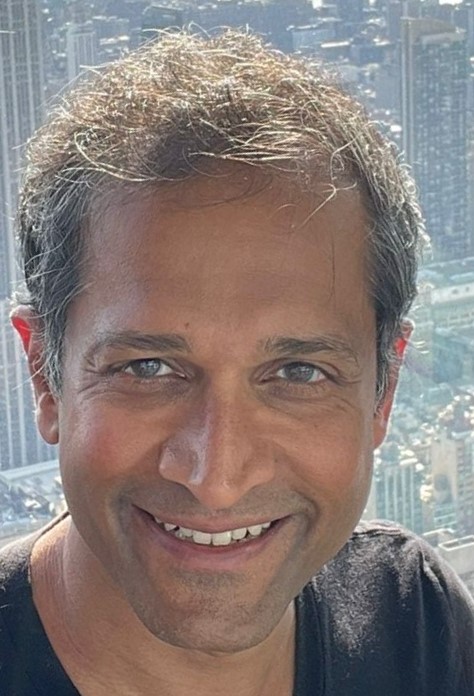 |
Prof. Girish Nair The University of Melbourne, Australia |
Abstract
We discuss two almost diametrically opposite stochastic perspectives on autonomous navigation and localisation: one discrete and finite-dimensional, and the other continuous and infinite-dimensional. In the first approach, we model the autonomous agent as a discrete-valued POMDP and consider entropy-based measures of trajectory uncertainty and complexity. These measures capture the minimum internal cost, in bits, of storing/communicating state trajectory beliefs and sensor observation sequences. In robotics, whole-of-trajectory entropies have previously been dismissed as intractable to optimise due to the nonlinearity of the joint entropy functional acting on the entire trajectory. We show that, surprisingly, these trajectory entropies can be put into convenient stage-additive forms that enable optimisation using standard techniques, leading to principled trade-offs between exploitation and exploration.
In the second approach, we model the agent dynamics as a continuous-valued stochastic process with infinite-dimensional, noisy measurements. This is motivated by systems with low-dimensional dynamics but high-dimensional sensors, for instance autonomous vehicles equipped with vision or LiDAR. For linear systems, we explicitly derive the optimal linear filter in the sense of the minimum mean square error, analogous to the classic Kalman filter. We then propose an extension of this approach to handle nonlinearities, leading to an EKF-like approach with infinite-dimensional measurements. This extension provides a novel system-theoretic justification for the use of image gradients in vision-based estimation. We demonstrate the practical utility of this filter on a real-world aerial drone dataset.
This is based on recent work with Dr Timothy L. Molloy and Maxwell M. Varley:
https://doi.org/10.1109/TAC.2023.3250159
https://doi.org/10.1109/TAC.2023.3264177
https://doi.org/10.1109/TAC.2024.3464892
https://arxiv.org/pdf/2509.18749
Biography
Girish N. Nair is a Professor in the Department of Electrical and Electronic Engineering at The University of Melbourne. He is a Fellow of the IEEE and was an Australian Research Council Future Fellow (2015 - 2019). His research focuses on the interplay between estimation, control and information theory, and he has received several prizes, including the 2014 George S. Axelby Outstanding Paper Award from the IEEE Control Systems Society and a 2006 SIAM Outstanding Paper Prize. From 2019 - 2024 he was the lead Australian investigator for the Australia-US Multidisciplinary University Research Initiative on Neuro-Autonomy. He is the General Chair of the 67th IEEE Conference on Decision and Control, to be held in Sydney in 2028, and the inaugural Chair of the Victoria/New South Wales Joint Chapter of the IEEE Information Theory Society.
Prescribed Performance Control in Networked Control Systems: State-of-the-Art and Open Challenges
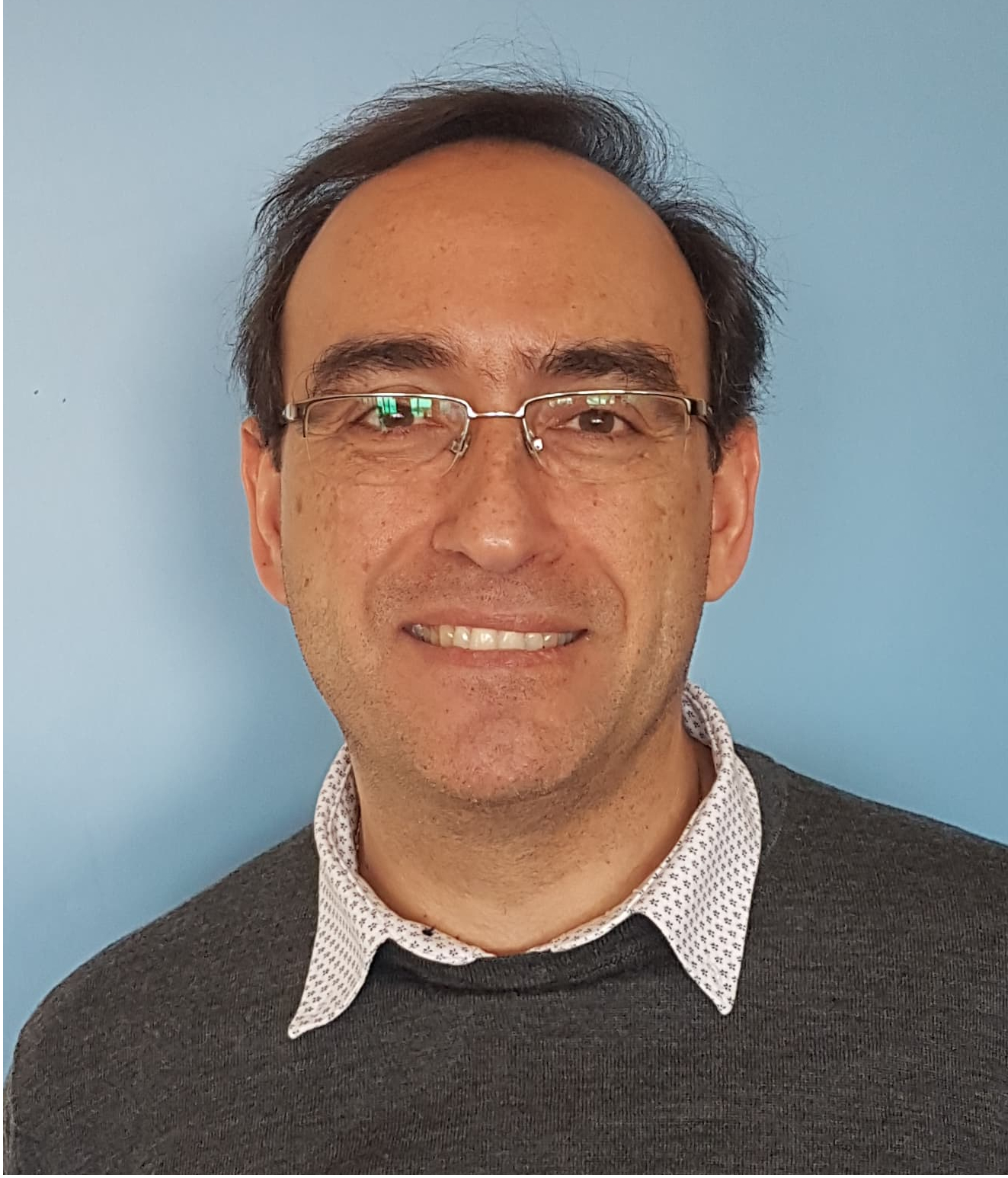 |
Prof. George Rovithakis Aristotle University of Thessaloniki, Greece |
Abstract
Networked Control Systems (NCSs) have become a fundamental architecture in modern control applications, where sensors, controllers, and actuators exchange information over shared communication networks. While this structure offers significant advantages in scalability, flexibility, and resource efficiency, it also introduces network-induced constraints and effects—such as delays, data losses, quantization, and asynchronous sampling—that can severely impair performance and threaten stability.
Outside the NCS framework, prescribed performance control (PPC) provides a powerful and conceptually elegant approach for enforcing user-defined transient and steady-state performance characteristics in a broad class of uncertain nonlinear systems. Its key strengths lie in the development of low-complexity, model-free, and robust controllers.
However, applying PPC within NCSs presents unique challenges due to the aforementioned network-induced effects, which can easily lead to internal instability. Addressing these challenges necessitates the development of robust PPC modifications tailored for networked environments.
How exactly can this be achieved? Join me for the lecture to find out.
Biography
George A. Rovithakis
is currently a Professor and Director of the Automation and Robotics Laboratory in the Department of Electrical and Computer Engineering at Aristotle University of Thessaloniki. His research interests include nonlinear control, robust adaptive control, prescribed performance control, robot control, and control-identification of uncertain systems using neural networks. He has authored or co-authored three books and over 190 papers published in scientific journals, conference proceedings, and book chapters.
Professor Rovithakis is ranked among the top 2% of researchers worldwide by Stanford University, based on the impact of his published work. His research on trajectory-oriented prescribed performance guarantees—such as maximum overshoot, minimum convergence rate, and maximum steady-state error—in nonlinear closed-loop systems with uncertain dynamics led to the development of the Prescribed Performance Control (PPC) methodology.
He currently serves as an Associate Editor for the IEEE Transactions on Automatic Control and has previously served as an Associate Editor for the IEEE Transactions on Neural Networks and the IEEE Transactions on Control Systems Technology. Additionally, he has been a member of the IEEE Control Systems Society Conference Editorial Board and the European Control Association (EUCA) Conference Editorial Board. Dr. Rovithakis is a member of the Technical Chamber of Greece, an elected member of EUCA, and a former Chair of the IEEE Greece Section Control Systems Chapter.
Model-Guided Extremum Seeking Control: Principles and Applications
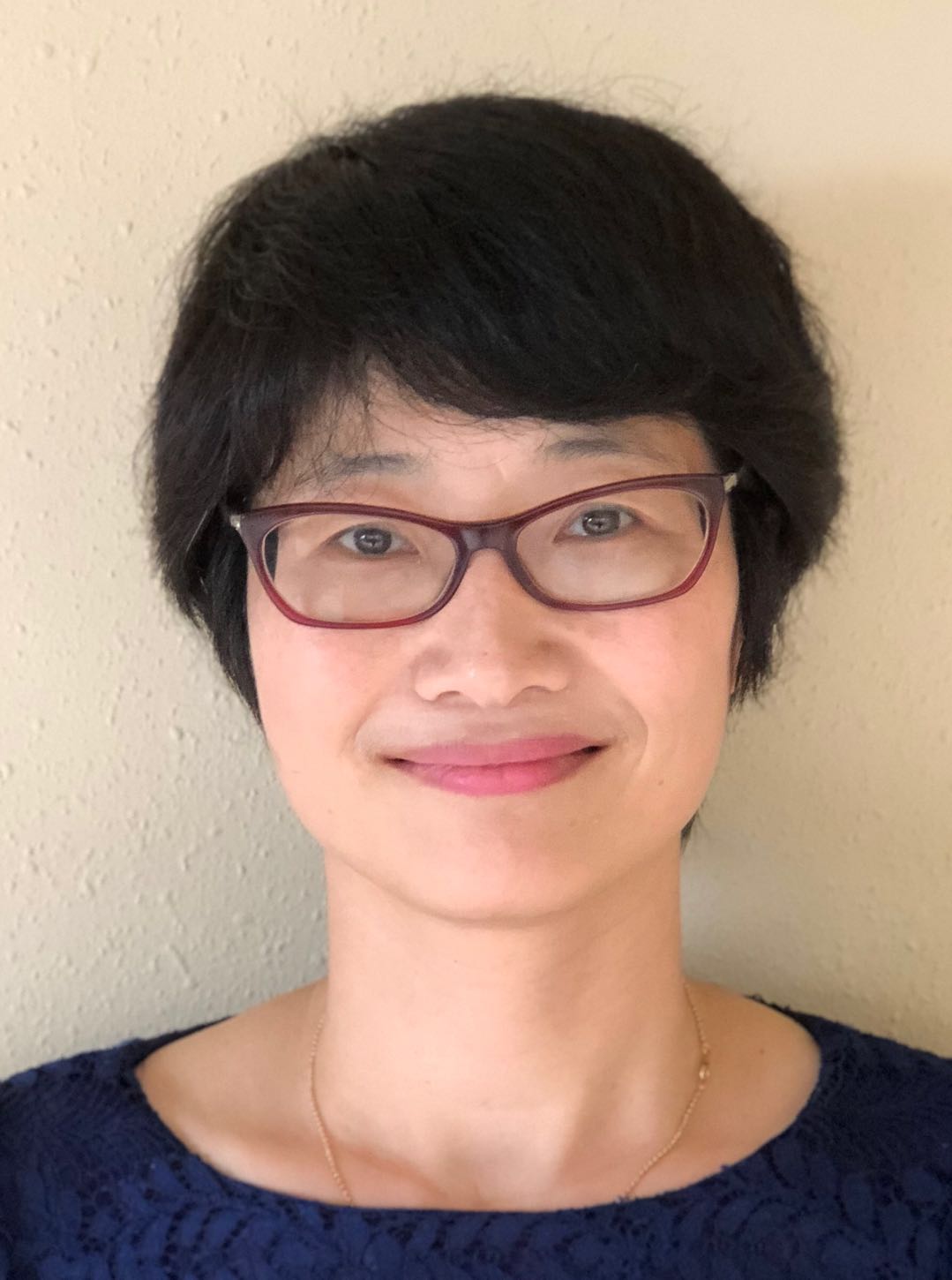 |
Prof. Ying Tan The University of Melbourne, Australia |
Abstract
Extremum Seeking Control (ESC) is a real-time optimisation technique that drives dynamical systems toward optimal operating points without requiring an explicit model of the objective function. While classical ESC methods are generally model-free, they are inherently slow due to the need for time-scale separation. Our recent work demonstrates that incorporating available system knowledge can substantially improve convergence speed and robustness. This talk presents recent advances in model-guided ESC, where partial system knowledge is exploited to enhance real-time optimization performance, with applications in human-prosthetic interfaces. We discuss the core principles, theoretical guarantees, and practical applications of these approaches across engineering systems.
Biography
Dr. Ying Tan is a Professor of Mechanical Engineering at The University of Melbourne, Australia. She received her bachelor’s degree from Tianjin University, China, and her PhD from the National University of Singapore. She has held an Australian Postdoctoral Fellowship and an ARC Future Fellowship, and currently serves on the ARC College of Experts. Dr. Tan is a Fellow of IEEE, Engineers Australia, the Asia-Pacific Artificial Intelligence Association, and the Australian Academy of Technology and Engineering. Her research focuses on intelligent systems, nonlinear control, data-driven optimization, rehabilitation robotics, human motor learning, wearable sensors, and model-guided machine learning.
Safety-Critical Control Under Disturbances: Foundation, Method and Robotic Application
 |
Prof. Jun Yang Loughborough University, UK |
Abstract
Safety-critical control is significant for robotics and autonomous system (RAS) applications where safety is an utmost concern. Control barrier function (CBF)-based control has shown its promising potential and power in delivering formal safe property of RAS. The presence of disturbances has negative effects on CBF-based control, leading to formal safety guarantee violations and degraded control performance. In this lecture, we will introduce the background of safety-critical control, highlight the motivation why formal method is required, give a comprehensive tutorial on CBF-based control approaches, and elaborate the emerging methods on safety-critical disturbance rejection control and their applications to interactive robotics and autonomous cranes for port automation.
Biography
Jun Yang
received the B.Sc. degree in automation from the Department of Automatic Control, Northeastern University, Shenyang, China, and the Ph.D. degree in control theory and control engineering from the School of Automation, Southeast University, Nanjing, China, in 2006 and 2011, respectively. He worked in School of Automation, Southeast University as Lecturer from 2011, Associate Professor from 2014, and Full Professor from 2018 all in Control Systems. Since 2020, he has been with the Department of Aeronautical and Automotive Engineering, Loughborough University, Loughborough, U.K., as a Senior Lecturer and is promoted to a Reader in 2023. He once held various academic visiting positions worldwide like Visiting Professor at Imperial College London (UK, 2019), Visiting Associate Professor at Nanyang Technological University (Singapore, 2016), and Visiting Research Fellows at RMIT University (Australia, 2015) and Western University of Sydney (Australia, 2013).
His research interests include disturbance observer, motion control, mechatronics, robotics, and automation. Dr. Yang was the recipient of the EPSRC New Investigator Award. He serves as an Associate Editor or Technical Editor for IEEE Transactions on Automatic Control, IEEE Transactions on Industrial Electronics, IEEE-ASME Transactions on Mechatronics, etc. He is the founding Editor-in-Chief of Advanced Mechatronics since 2026, and Deputy Editor-in-Chief of Drones and Autonomous Vehicles since 2024. He is a Fellow of IEEE, IET, and AAIA.
Design, Planning and Control of Specialized Rotary-Wing Unmanned Aerial Vehicles
 |
Prof. Lixian Zhang Harbin Institute of Technology, China |
Abstract
Specialized robots are the robots designed for specific, complex, or extreme operational scenarios, exhibiting tailored functionalities. Unlike consumer-grade and industrial-grade UAVs, specialized rotary-wing UAVs possess unique configurations, payloads, and materials. By combining the inherent advantages of rotary-wing vehicles, including high maneuverability, spatial accessibility, and flexible deployment, these specialized rotary-wing UAVs play an irreplaceable role in missions including security reconnaissance, emergency rescue, and extreme environments operations. This talk will present the design and development work by the team leaded by the lecturer on the configuration, planning, and control of several classes of specialized rotary-wing UAVs: rotary-wing hybrid terrestrial-aerial vehicles, in-cabin flying robots for space stations, and etc. Also, this talk will conclude with a perspective on the future development trends of such specialized UAVs.
Biography
Prof.Lixian Zhang
received the Ph.D. degree in control science and engineering from the Harbin Institute of Technology (HIT), Harbin, China, in 2006. From January 2007 to September 2008, he was a Postdoctoral Fellow in the Department of Mechanical Engineering at the Ecole Polytechnique de Montreal, Canada. He was a Visiting Professor at the Process Systems Engineering Laboratory, Massachusetts Institute of Technology (MIT), Cambridge, MA, USA, from February 2012 to March 2013. Since January 2009, he has been with the Harbin Institute of Technology, where he is currently a Full Professor and the Vice Dean of the Institute for Artificial Intelligence.
Prof. Zhang’s research interests include advanced/intelligent control theory and applications in specialized robots and spacecraft. He has co-authored over 200 high-impact papers in journals including Automatica, IEEE TAC/TAES/RAL, and AIAA JGCD. His research works have been awarded with 2023 IEEE RAL Best Paper Award, and recognized as One of 100 Most Influential Papers at China in 2013. He has led over 30 scientific research projects, and developed a series of robotic platforms that applied in national major in- orbit engineering missions; reported by CCTV’s News Broadcast, Live News, and other CCTV programs.
Prof. Zhang currently serves as Senior Editor for IEEE Control Systems Letters, and previously served as Associate Editor for IEEE Transactions on Automatic Control and IEEE Transactions on Cybernetics. He is a winner of the National Science Fund for Distinguished Young Scholars, and has been honored with “Qian Xuesen Outstanding Contribution Award”. He received the awards of “National Natural Science Award” (second class) and “Heilongjiang Natural Science Award” (first class, two times). He has been listed as a Clarivate Analytics Highly Cited Researcher from 2014 to 2023. He is a Fellow of IEEE and IET.


