
杰出讲座
Distributed Learning/Optimization algorithms with approximate Newton-type methods
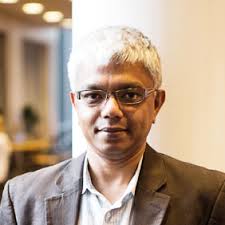 |
Subhrakanti Dey 教授 乌普萨拉大学, 瑞典 |
摘要
In this talk, we will consider the problem of distributed multi-agent learning, where the global aim is to minimize a sum of local objective (empirical loss) functions through local optimization and information exchange between neighbouring nodes. We introduce a Newton-type fully distributed optimization algorithm, Network-GIANT, which is based on GIANT, a Federated learning algorithm that relies on a centralized parameter server. The Network-GIANT algorithm is designed via a combination of gradient-tracking and a Newton-type iterative algorithm at each node with consensus-based averaging of local gradient and Newton updates. The resulting algorithm is efficient in terms of both communication cost and run-time, making it suitable for wireless networks. We prove that our algorithm guarantees global exponential convergence (also known as linear convergence) to the exact global optimum over the network for strongly convex and smooth loss functions.We also illustrate how Network-GIANT can achieve a faster local linear convergence rate asymptotically as the iterates get closer to the optimum. Recent extensions to compressed information transmission and accelerated (heavy-ball type) versions of Network-GIANT will also be discussed. Numerical studies show superior convergence performance of Network-GIANT and its extensions with compression or acceleration, over other state-of-the-art distributed learning algorithms and their corresponding counterparts with compression or acceleration.
个人简介
Subhrakanti Dey
received the Ph.D. degree from the Department of Systems Engineering, Research School of Information Sciences and Engineering, Australian National University, Canberra, in 1996.
He is currently a Professor and Head of the Signals and Systems division in the Dept of Electrical Engineering at Uppsala University, Sweden. He has also held professorial positions at NUI Maynooth, Ireland and University of Melbourne, Australia. His current research interests include networked control systems, distributed machine learning and optimization, and cyber-physical security. He is a Senior Editor for IEEE Transactions of Control of Network Systems and IEEE Control Systems Letters, and an Associate Editor for Automatica. He is a Fellow of the IEEE.
Encoders for Simultaneous Sensing of Position and Speed – A Bottleneck in Electrical Drives with Digital Control
 |
Ralph Kennel 教授 慕尼黑工业大学, 德国 |
摘要
In the beginning of this century there have been publications explaining the technical requirements of encoders to be used in electrical drives with digital control. The main statement of these papers have been that neither high resolution resolvers nor high resolution optical encoders really do provide features as good as of analogue tacho generators. The performance of servo drives with digital control, however, has improved in com¬parison to former drives with analogue control. Neverthe¬less the speed detection performance of optical encoders still can¬not cope with high precision tacho generators - they still are the technical bottle neck for further improvements in digi¬tal drive control. This keynote reports on the real requirements for encoders in electrical drives with digital control. Several exoisting technologies as well as some future oriented developments are compared with these requirements.
个人简介
Ralph M. Kennel
was born in 1955 at Kaiserslautern (Germany). In 1979 he got his diploma degree and in 1984 his Dr.-Ing. (Ph.D.) degree from the University of Kaiserslautern.
From 1983 to 1999 he worked on several positions with Robert BOSCH GmbH (Germany). Until 1997 he was responsible for the development of servo drives. Dr. Kennel was one of the main supporters of VECON and SERCOS interface, two multi-company development projects for a microcontroller and a digital interface especially dedicated to servo drives. Furthermore he took actively part in the definition and release of new standards with respect to CE marking for servo drives.
From 1983 to 1999 he worked on several positions with Robert BOSCH GmbH (Germany). Until 1997 he was responsible for the development of servo drives. Dr. Kennel was one of the main supporters of VECON and SERCOS interface, two multi-company development projects for a microcontroller and a digital interface especially dedicated to servo drives. Furthermore he took actively part in the definition and release of new standards with respect to CE marking for servo drives.
From 1994 to 1999 Dr. Kennel was appointed Visiting Professor at the University of Newcastle-upon-Tyne (England, UK). From 1999 - 2008 he was Professor for Electrical Machines and Drives at Wuppertal University (Germany). Since 2008 until his retirement in 2022 he was Professor for Electrical Drive systems and Power Electronics at Technische Universitaet Muenchen (Germany). His main interests are: Sensorless control of AC drives, predictive control of power electronics and contactless energy transmission.
Dr. Kennel is a Senior Member of IEEE, a Fellow of IET (former IEE) and a Chartered Engineer in the UK. Within IEEE he is Treasurer of the Germany Section – furthermore he has been Distinguished Lecturer of the Power Electronics Society (IEEE-PELS) as well as Vice President Meetings of the same society.
In 2018 Dr. Kennel received the Doctoral degree honoris causa from Universitatea Stefan cel Mare in Suceava (Romania).
Dr. Kennel has received in 2013 the Harry Owen Distinguished Service Award from IEEE-PELS, the EPE Association Distinguished Service Award in 2015 as well as the EPE Outstanding Achievement Award in 2019.
Dr. Kennel was appointed “Extraordinary Professor” by the University of Stellenbosch (South Africa) from 2016 to 2019 and as “Visiting Professor” at the Haixi Institute by the Chinese Academy of Sciences from 2016 to 2021. There he was appointed as "Jiaxi Lu Overseas Guest Professor" in 2017. In 2018 Dr. Kennel was appointed Guest Professor at Harbin Institute of Technology (HIT), Harbin, China. In 2019 Dr. Kennel was appointed „Honorary Chair Professor“ ("distinguished visiting professor") at Shandong University in Jinan, China.
不确定非线性互联大系统分散控制设计方法研究
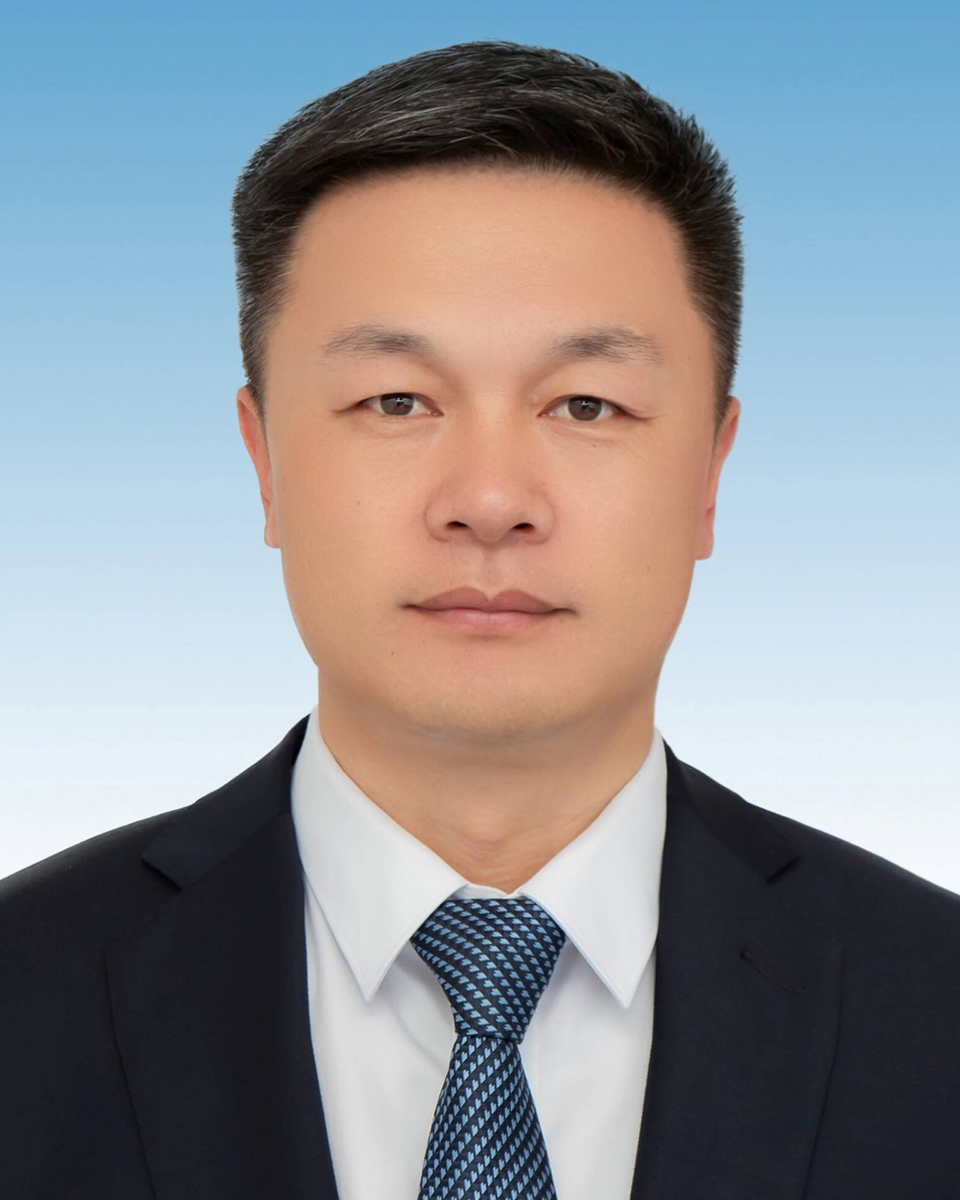 |
李永明 教授 辽宁工业大学,中国 |
摘要
实际工程控制系统,如:航空航天系统,机器人系统以及化工过程系统等,日趋呈现出高度的非线性、大规模性、不确定性、多变量性以及强耦合性等综合特征,给传统的集中式控制理论和方法带来了挑战。分散控制通过局部自治、有限协调的方式,从根本上解决了大规模复杂系统在信息、计算和可靠性方面的瓶颈。因此,不确定非线性互联大系统的分散控制已成为应对现代复杂工程系统的核心方法之一。本报告针对典型的不确定非线性互联大系统,研究分散控制器的设计方法,以及控制系统的稳定性、收敛性和鲁棒性的证明等问题。
个人简介
李永明 ,教授,博士生导师,辽宁工业大学副校长,国务院政府特殊津贴专家,国家自然科学基金青年科学基金A类、B类项目获得者。研究方向:智能控制理论及应用。主持国家自然科学基金联合重点项目、国家重点研发计划课题、辽宁省“揭榜挂帅”重大课题等20余项国家及省部级项目。发表论文100余篇,授权发明专利、软件著作权20余项。出版教材及专著4部。获教育部自然科学一等奖,辽宁省自然科学二等奖,中国自动化学会科技进步一等奖。
非线性控制的关联系统方法
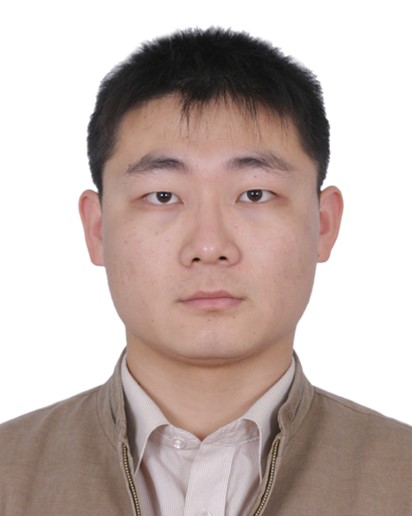 |
刘腾飞 教授 东北大学,中国 |
摘要
非线性动力学和网络化关联既是系统复杂性的主要体现,又是各类系统实现大范围高性能控制所需考虑的主要因素。随着对各类单一系统或装置的控制研究日趋完善,以及感知、通信、计算等技术的发展,使不同受控系统通过物理耦合或信息交换实现更高水平的协作已是大势所趋,而其中的主要障碍仍然来自于非线性动力学和网络化关联。本报告结合近二十年来的若干典型控制案例,包括事件触发控制、反馈优化控制、约束满足控制等,探讨关联属性对闭环非线性动态行为的影响规律,并在此基础上发展新的工具来克服网络化非线性系统协同优化控制中的新难题。
个人简介
刘腾飞 ,东北大学流程工业综合自动化国家重点实验室教授。2011年毕业于澳大利亚国立大学,获博士学位。研究方向为网络化非线性系统的稳定性与控制及其在工业过程与无人系统中的应用等,曾经在将非线性小增益定理推广到网络化关联系统以及在量化控制、事件触发控制、分布式协同控制与优化以及安全控制等方面开展了深入研究,获得多项科技和学术奖励,包括国家自然科学奖二等奖以及多项国际学术会议最佳论文奖。承担了多项国家级科研项目,包括国家杰出青年科学基金(青A)、国家自然科学基金重点项目以及国家自然科学基金创新研究群体项目(B类)。目前担任IEEE Transactions on Automatic Control等国际学术期刊编委。
Autonomous Navigation and Localisation: A Tale of Two Viewpoints
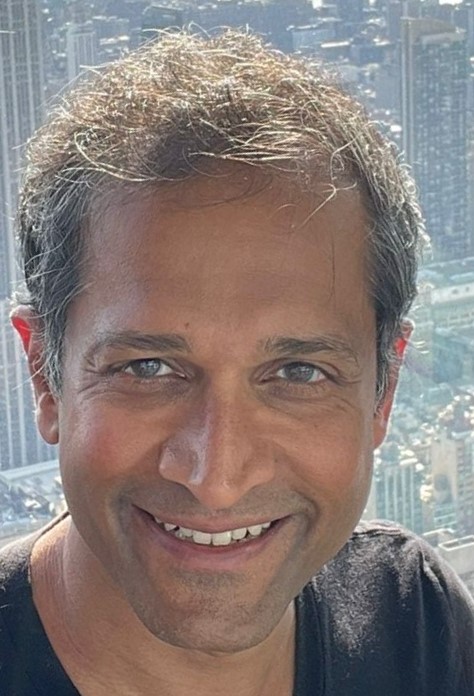 |
Girish Nair 教授 墨尔本大学, 澳大利亚 |
摘要
We discuss two almost diametrically opposite stochastic perspectives on autonomous navigation and localisation: one discrete and finite-dimensional, and the other continuous and infinite-dimensional. In the first approach, we model the autonomous agent as a discrete-valued POMDP and consider entropy-based measures of trajectory uncertainty and complexity. These measures capture the minimum internal cost, in bits, of storing/communicating state trajectory beliefs and sensor observation sequences. In robotics, whole-of-trajectory entropies have previously been dismissed as intractable to optimise due to the nonlinearity of the joint entropy functional acting on the entire trajectory. We show that, surprisingly, these trajectory entropies can be put into convenient stage-additive forms that enable optimisation using standard techniques, leading to principled trade-offs between exploitation and exploration.
In the second approach, we model the agent dynamics as a continuous-valued stochastic process with infinite-dimensional, noisy measurements. This is motivated by systems with low-dimensional dynamics but high-dimensional sensors, for instance autonomous vehicles equipped with vision or LiDAR. For linear systems, we explicitly derive the optimal linear filter in the sense of the minimum mean square error, analogous to the classic Kalman filter. We then propose an extension of this approach to handle nonlinearities, leading to an EKF-like approach with infinite-dimensional measurements. This extension provides a novel system-theoretic justification for the use of image gradients in vision-based estimation. We demonstrate the practical utility of this filter on a real-world aerial drone dataset.
This is based on recent work with Dr Timothy L. Molloy and Maxwell M. Varley:
https://doi.org/10.1109/TAC.2023.3250159
https://doi.org/10.1109/TAC.2023.3264177
https://doi.org/10.1109/TAC.2024.3464892
https://arxiv.org/pdf/2509.18749
个人简介
Girish N. Nair is a Professor in the Department of Electrical and Electronic Engineering at The University of Melbourne. He is a Fellow of the IEEE and was an Australian Research Council Future Fellow (2015 - 2019). His research focuses on the interplay between estimation, control and information theory, and he has received several prizes, including the 2014 George S. Axelby Outstanding Paper Award from the IEEE Control Systems Society and a 2006 SIAM Outstanding Paper Prize. From 2019 - 2024 he was the lead Australian investigator for the Australia-US Multidisciplinary University Research Initiative on Neuro-Autonomy. He is the General Chair of the 67th IEEE Conference on Decision and Control, to be held in Sydney in 2028, and the inaugural Chair of the Victoria/New South Wales Joint Chapter of the IEEE Information Theory Society.
Prescribed Performance Control in Networked Control Systems: State-of-the-Art and Open Challenges
 |
George Rovithakis 教授 塞萨洛尼基亚里士多德大学, 希腊 |
摘要
Networked Control Systems (NCSs) have become a fundamental architecture in modern control applications, where sensors, controllers, and actuators exchange information over shared communication networks. While this structure offers significant advantages in scalability, flexibility, and resource efficiency, it also introduces network-induced constraints and effects—such as delays, data losses, quantization, and asynchronous sampling—that can severely impair performance and threaten stability.
Outside the NCS framework, prescribed performance control (PPC) provides a powerful and conceptually elegant approach for enforcing user-defined transient and steady-state performance characteristics in a broad class of uncertain nonlinear systems. Its key strengths lie in the development of low-complexity, model-free, and robust controllers.
However, applying PPC within NCSs presents unique challenges due to the aforementioned network-induced effects, which can easily lead to internal instability. Addressing these challenges necessitates the development of robust PPC modifications tailored for networked environments.
How exactly can this be achieved? Join me for the lecture to find out.
个人简介
George A. Rovithakis
is currently a Professor and Director of the Automation and Robotics Laboratory in the Department of Electrical and Computer Engineering at Aristotle University of Thessaloniki. His research interests include nonlinear control, robust adaptive control, prescribed performance control, robot control, and control-identification of uncertain systems using neural networks. He has authored or co-authored three books and over 190 papers published in scientific journals, conference proceedings, and book chapters.
Professor Rovithakis is ranked among the top 2% of researchers worldwide by Stanford University, based on the impact of his published work. His research on trajectory-oriented prescribed performance guarantees—such as maximum overshoot, minimum convergence rate, and maximum steady-state error—in nonlinear closed-loop systems with uncertain dynamics led to the development of the Prescribed Performance Control (PPC) methodology.
He currently serves as an Associate Editor for the IEEE Transactions on Automatic Control and has previously served as an Associate Editor for the IEEE Transactions on Neural Networks and the IEEE Transactions on Control Systems Technology. Additionally, he has been a member of the IEEE Control Systems Society Conference Editorial Board and the European Control Association (EUCA) Conference Editorial Board. Dr. Rovithakis is a member of the Technical Chamber of Greece, an elected member of EUCA, and a former Chair of the IEEE Greece Section Control Systems Chapter.
Model-Guided Extremum Seeking Control: Principles and Applications
 |
Ying Tan 教授 墨尔本大学, 澳大利亚 |
摘要
Extremum Seeking Control (ESC) is a real-time optimisation technique that drives dynamical systems toward optimal operating points without requiring an explicit model of the objective function. While classical ESC methods are generally model-free, they are inherently slow due to the need for time-scale separation. Our recent work demonstrates that incorporating available system knowledge can substantially improve convergence speed and robustness. This talk presents recent advances in model-guided ESC, where partial system knowledge is exploited to enhance real-time optimization performance, with applications in human-prosthetic interfaces. We discuss the core principles, theoretical guarantees, and practical applications of these approaches across engineering systems.
个人简介
Dr. Ying Tan is a Professor of Mechanical Engineering at The University of Melbourne, Australia. She received her bachelor’s degree from Tianjin University, China, and her PhD from the National University of Singapore. She has held an Australian Postdoctoral Fellowship and an ARC Future Fellowship, and currently serves on the ARC College of Experts. Dr. Tan is a Fellow of IEEE, Engineers Australia, the Asia-Pacific Artificial Intelligence Association, and the Australian Academy of Technology and Engineering. Her research focuses on intelligent systems, nonlinear control, data-driven optimization, rehabilitation robotics, human motor learning, wearable sensors, and model-guided machine learning.
Safety-Critical Control Under Disturbances: Foundation, Method and Robotic Application
 |
Jun Yang 教授 拉夫堡大学, 英国 |
摘要
Safety-critical control is significant for robotics and autonomous system (RAS) applications where safety is an utmost concern. Control barrier function (CBF)-based control has shown its promising potential and power in delivering formal safe property of RAS. The presence of disturbances has negative effects on CBF-based control, leading to formal safety guarantee violations and degraded control performance. In this lecture, we will introduce the background of safety-critical control, highlight the motivation why formal method is required, give a comprehensive tutorial on CBF-based control approaches, and elaborate the emerging methods on safety-critical disturbance rejection control and their applications to interactive robotics and autonomous cranes for port automation.
个人简介
Jun Yang
received the B.Sc. degree in automation from the Department of Automatic Control, Northeastern University, Shenyang, China, and the Ph.D. degree in control theory and control engineering from the School of Automation, Southeast University, Nanjing, China, in 2006 and 2011, respectively. He worked in School of Automation, Southeast University as Lecturer from 2011, Associate Professor from 2014, and Full Professor from 2018 all in Control Systems. Since 2020, he has been with the Department of Aeronautical and Automotive Engineering, Loughborough University, Loughborough, U.K., as a Senior Lecturer and is promoted to a Reader in 2023. He once held various academic visiting positions worldwide like Visiting Professor at Imperial College London (UK, 2019), Visiting Associate Professor at Nanyang Technological University (Singapore, 2016), and Visiting Research Fellows at RMIT University (Australia, 2015) and Western University of Sydney (Australia, 2013).
His research interests include disturbance observer, motion control, mechatronics, robotics, and automation. Dr. Yang was the recipient of the EPSRC New Investigator Award. He serves as an Associate Editor or Technical Editor for IEEE Transactions on Automatic Control, IEEE Transactions on Industrial Electronics, IEEE-ASME Transactions on Mechatronics, etc. He is the founding Editor-in-Chief of Advanced Mechatronics since 2026, and Deputy Editor-in-Chief of Drones and Autonomous Vehicles since 2024. He is a Fellow of IEEE, IET, and AAIA.
特种旋翼飞行器设计、规划与控制
 |
张立宪 教授 哈尔滨工业大学,中国 |
摘要
特种机器人是面向特殊、复杂、极端环境或任务,具备特定、专用功能的机器人。特种旋翼飞行器,也与消费级和工业级无人机不同,具有特种的构型、载荷、材质,结合旋翼飞行器的高机动性、空间可达性、可灵活部署等优势,在安防侦察、应急救援、极端环境作业等任务中具有不可替代的作用。本报告将介绍团队在旋翼式空地跨域无人机、空间站舱内飞行器等几类特种旋翼飞行器的构型、规划与控制方面的设计和实践工作,并展望其未来发展趋势。
个人简介
张立宪 ,哈尔滨工业大学航天学院教授、博士生导师,国家杰出青年科学基金获得者、国家高层次人才,IEEE会士、IET会士。长期从事自动控制理论及应用研究,主持载人航天工程专项、国家重大科研仪器研制项目、某部委重点项目等科研项目30余项,在智能决策与控制,特种机器人、航天器自主控制等方向上发表Automatica、IEEE TAC/TAES/RAL、AIAA JGCD等高水平论文200余篇,获2023年度机器人领域权威期刊IEEE RAL最佳论文、2013年中国百篇最具国际影响学术论文;谷歌学术引用2万余次,连续10年入选全球高被引学者。作为总设计师,研发了中国首台空间站舱内机器人,被新年除夕黄金时段《新闻联播》等多次央视报道;所研平台在党和国家领导人出席的重要展览中展出。曾获钱学森杰出贡献奖,国家自然科学二等奖、黑龙江省自然科学一等奖(2项)。


