
大会报告
离散数字液压伺服控制技术
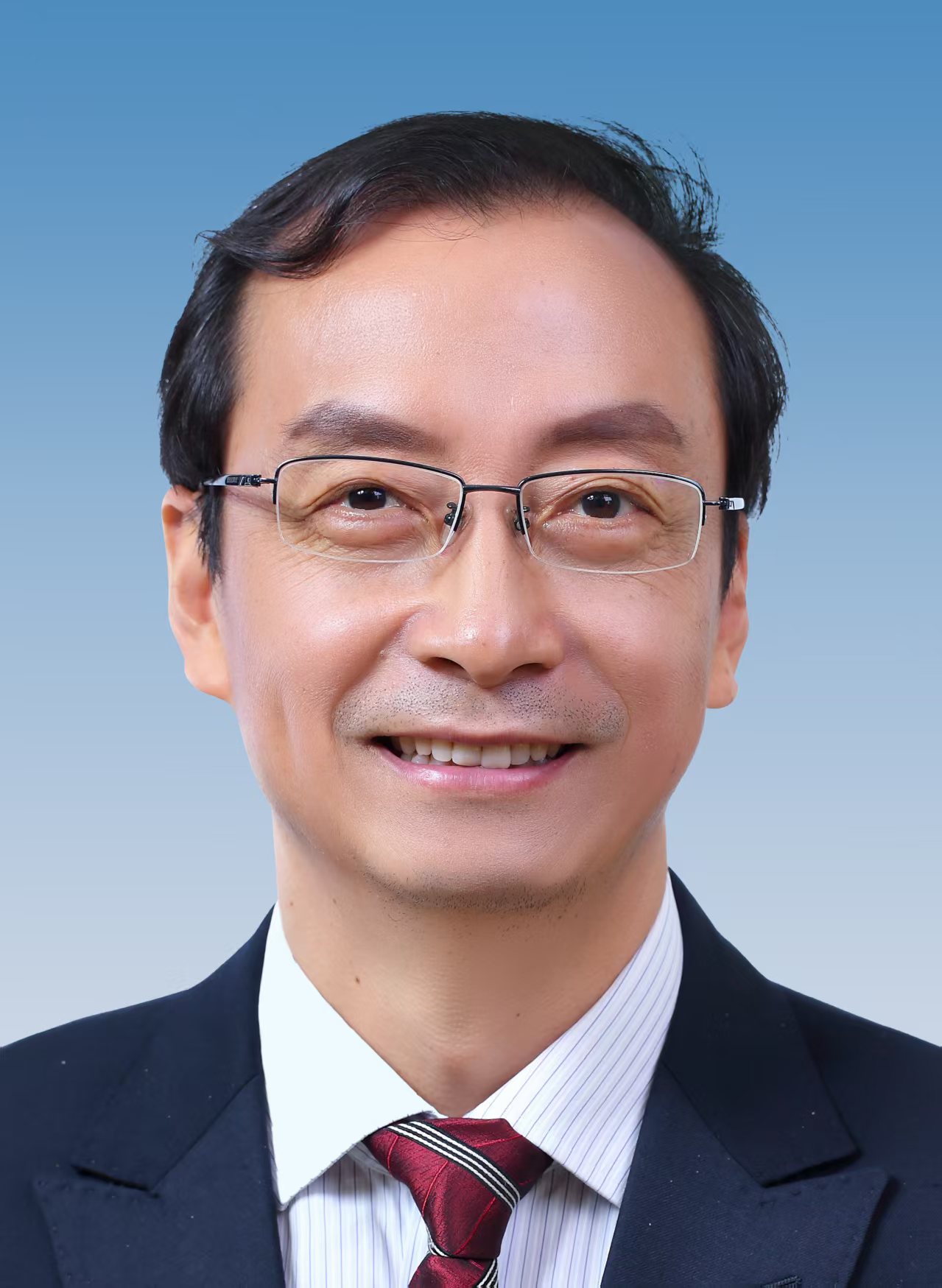 |
焦宗夏 院士 北京航空航天大学, 中国 |
摘要
电液伺服系统在航空领域发挥着关键作用,广泛应用于飞控、刹车、前轮转弯等核心系统,直接关系到装备的安全性。然而,现有航空电液伺服系统普遍采用结构精密、易受污染的电液伺服阀,存在可靠性低、装配调试难度大的问题。离散数字液压作为一种新型离散数字液压伺服技术,以其元件简单可靠、系统灵活性高、故障容错能力强等优势,有望从根本上避免传统伺服阀的存在的问题,为航空液压伺服控制提供全新的解决方案。
本课题组致力于离散数字液压技术的创新研究,通过“新元件、新方法、新系统”的全链条创新,成功研制了微型低延迟双驱动高速开关阀元件,突破了多级离散变增益的高速开关阀高精度控制方法,以及多种离散数字液压控制构型。这些成果得到应用,并取得了显著成效,有力提升了航空装备的可靠性和安全性。
个人简介
焦宗夏 ,中国工程院院士,北京航空航天大学自动化科学与电气工程学院教授、北航机载系统创新中心主任。担任飞行器一体化控制全国重点实验室主任、中国航空学会常务理事与机电分会名誉主任、中国机械工程学会常务理事与流控分会主任。担任《中国航空学报》中英文两刊主编。
长期从事航空机载机电系统与飞行控制系统研究,在电液控制理论、核心基础件、新概念飞行器、高端试验装备等方面取得多项原创性成果,系统解决了飞行器高可靠液压、高安全制动、伺服作动与飞行器试验等难题,成果应用于航空、航天等多个重大型号研制。连续5年入选爱思唯尔高被引学者,获得何梁何利奖、全国创新争先奖章,获得国家技术发明二等奖2项、国家科技进步二等奖1项。
多智能体系统的安全控制:从故障诊断、容错控制迈向容错博弈控制
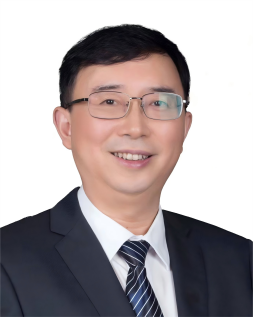 |
姜斌 教授 南京航空航天大学, 中国 |
摘要
近年来,随着多智能体系统日益复杂,其在运行过程中愈发容易受到各类故障的影响,既包括单个智能体的失效,也涉及通信链路的中断,这些故障直接威胁着整个系统的稳定性与安全性。因此,针对多智能体系统高度安全性的需求愈发迫切,推动广大学者对故障诊断与容错控制研究的显著关注。本次报告旨在介绍多智能体系统的故障诊断、容错控制以及容错博弈控制这三个方面的研究成果,实现系统的安全可靠运行。在故障诊断模块中,提出一种非线性分布式故障诊断设计方法,并通过引入事件触发机制进行优化,从而提升诊断效率并降低通信负载。在容错控制模块中,提出基于全驱动系统理论、自适应方法与预设性能控制等理论的容错控制方法,使系统在故障下仍能实现稳健恢复与持续协同。进一步提出了容错博弈控制方法,确保多智能体系统的稳定性与最优性能同步实现。上述研究成果适用于同构与异构多智能体系统,并通过实际无人集群平台的协同容错控制实验进行了验证。
个人简介
姜斌 ,于中国沈阳的东北大学获得自动控制专业博士学位。他曾分别在新加坡、法国、美国和加拿大从事博士后研究、担任研究员、特邀教授及访问教授。
现任中国南京航空航天大学校长、教育部"长江学者"特聘教授。他已出版专著8部,并在国际期刊上发表论文100余篇。目前的研究方向包括智能故障诊断、容错控制及其在直升机、卫星和高铁中的应用。曾获国家自然科学奖二等奖。他是IEEE Fellow、亚太人工智能协会(AAIA)Fellow、中国自动化学会(CAA)Fellow、IEEE南京分会控制系统专业委员会主席,以及国际自动控制联合会(IFAC)技术过程故障检测、监督与安全技术委员会委员。目前担任《International Journal of Control, Automation and Systems》高级编委,并兼任《IEEE Transactions on Cybernetics》、《IEEE Transactions on Neural Networks and Learning Systems》及《IEEE Transactions on Industrial Informatics》等多种期刊的副编辑或编委。
Physics-informed learning and control of mixed-autonomy traffic
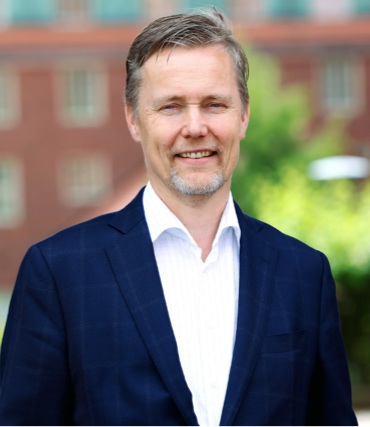 |
Karl Henrik Johansson 教授 瑞典皇家理工学院, 瑞典 |
摘要
Road infrastructure remains significantly underutilized in current traffic systems. Mixed-autonomy traffic, where connected and automated vehicles (CAVs) interact with human-driven vehicles, offers a unique opportunity to improve system-level efficiency, resilience, and safety. In this context, CAVs can be leveraged not only as transportation agents but also as distributed sensors and actuators, enabling real-time state estimation and feedback control of large-scale traffic networks. This presentation introduces a physics-informed learning and control framework for mixed-autonomy traffic systems. By embedding traffic flow dynamics into machine learning models, we develop structured, data-efficient representations that generalize across operating conditions while preserving physical consistency. These models enable the design of scalable feedback control strategies that proactively mitigate congestion and respond to disturbances under uncertainty. We provide a comparative analysis of model architectures from a control perspective, highlighting trade-offs in expressiveness, interpretability, and robustness. Furthermore, we address the challenges of human–automation interaction by integrating formal safety guarantees into the control design and by incorporating teleoperation as a supervisory fallback mechanism in safety-critical scenarios. The proposed framework is validated through extensive real-world demonstrations conducted in collaboration with Swedish industry partners, illustrating its potential for deployment in next-generation intelligent transportation systems.
个人简介
Karl H. Johansson is Swedish Research Council Distinguished Professor in Electrical Engineering and Computer Science at KTH Royal Institute of Technology in Sweden and Founding Director of Digital Futures. He earned his MSc degree in Electrical Engineering and PhD in Automatic Control from Lund University. He has held visiting positions at UC Berkeley, Caltech, NTU and other institutions. His research interests focus on networked control systems and cyber-physical systems with applications in transportation, energy, and automation networks. For his scientific contributions, he has received numerous best paper awards and various other distinctions from IEEE, IFAC, and other organizations. He has been awarded Distinguished Professor by the Swedish Research Council, Wallenberg Scholar by the Knut and Alice Wallenberg Foundation, Future Research Leader by the Swedish Foundation for Strategic Research. He has also received the triennial IFAC Young Author Prize, IEEE CSS Distinguished Lecturer, IFAC Outstanding Service Award, and IEEE CSS Hendrik W. Bode Lecture Prize. His extensive service to the academic community includes being President of the European Control Association, IEEE CSS Vice President, and Member of IEEE CSS Board of Governors and IFAC Council. He has served on the editorial boards of Automatica, IEEE TAC, IEEE TCNS and many other journals. He has also been a member of the Swedish Scientific Council for Natural Sciences and Engineering Sciences. He is Fellow of both the IEEE and the Royal Swedish Academy of Engineering Sciences.
MAD Games: Multi-Agent Dynamic Games - Lessons from the Limits of Autonomous Racing
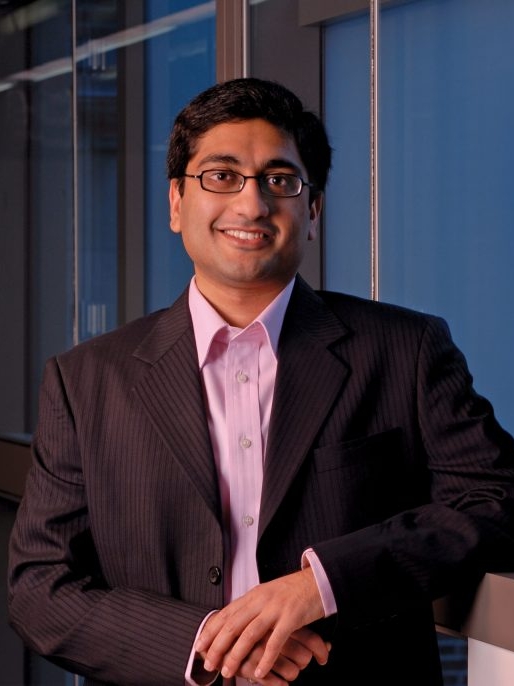 |
Rahul Mangharam 教授 宾夕法尼亚大学, 美国 |
摘要
The critical challenge in deploying autonomous systems is achieving peak performance without compromising safety. Autonomous racing crystallizes this challenge, as it punishes timid policies and demands robust, adaptive strategies in multi-agent settings. Current approaches often fail by either oversimplifying the behavior of other agents or lacking mechanisms for real-time adaptation.
This talk presents research that pushes the boundaries of perception, planning, and control. We will explore how to develop highly competitive agents through:
Adversarial Training: Leveraging game theory and distributionally robust online adaptation to create agents that dynamically balance safety and assertiveness.
Adaptive Safety: Using conformal prediction, control barrier function and imitation learning we show how multiple imperfect experts train an AI to perform better than any single expert.
Safe MPC Frameworks: Implementing iterative control strategies for nonlinear stochastic systems to handle constrained, real-world uncertainty.
All research is implemented on our RoboRacer.ai platform—1/10th the size, but 10x the fun. The key takeaway is a deeper understanding of how to build and validate safe autonomous systems for complex, interactive environments.
个人简介
Rahul Mangharam
is Professor of Electrical & Systems Engineering and Computer & Information Science at the University of Pennsylvania. His research is on Trustworthy AI for safe autonomous systems. His work bridges formal methods, machine learning, and control theory to create provably safe systems for applications including autonomous vehicles, urban air mobility, and life-critical medical devices.
For his contributions to life-critical systems, he received the Presidential Early Career Award for Scientists and Engineers (PECASE) from President Obama. His work has also been recognized with the NSF CAREER Award, the Intel Early Faculty Career Award, IEEE Benjamin Franklin Key Award, multiple best paper awards from ACM and IEEE, and selection to the National Academy of Engineering's US Frontiers of Engineering.
Dr. Mangharam serves as the Penn Director for the $20 million Safety21 National University Transportation Center, a US Department of Transportation center for safe and efficient mobility. He also directs the Autoware Center of Excellence, an open-source autonomous driving consortium of over 33 academic partners, and is the founder of the RoboRacer/F1TENTH Autonomous Racing Community, now active in over 90 universities worldwide.


