
Keynotes
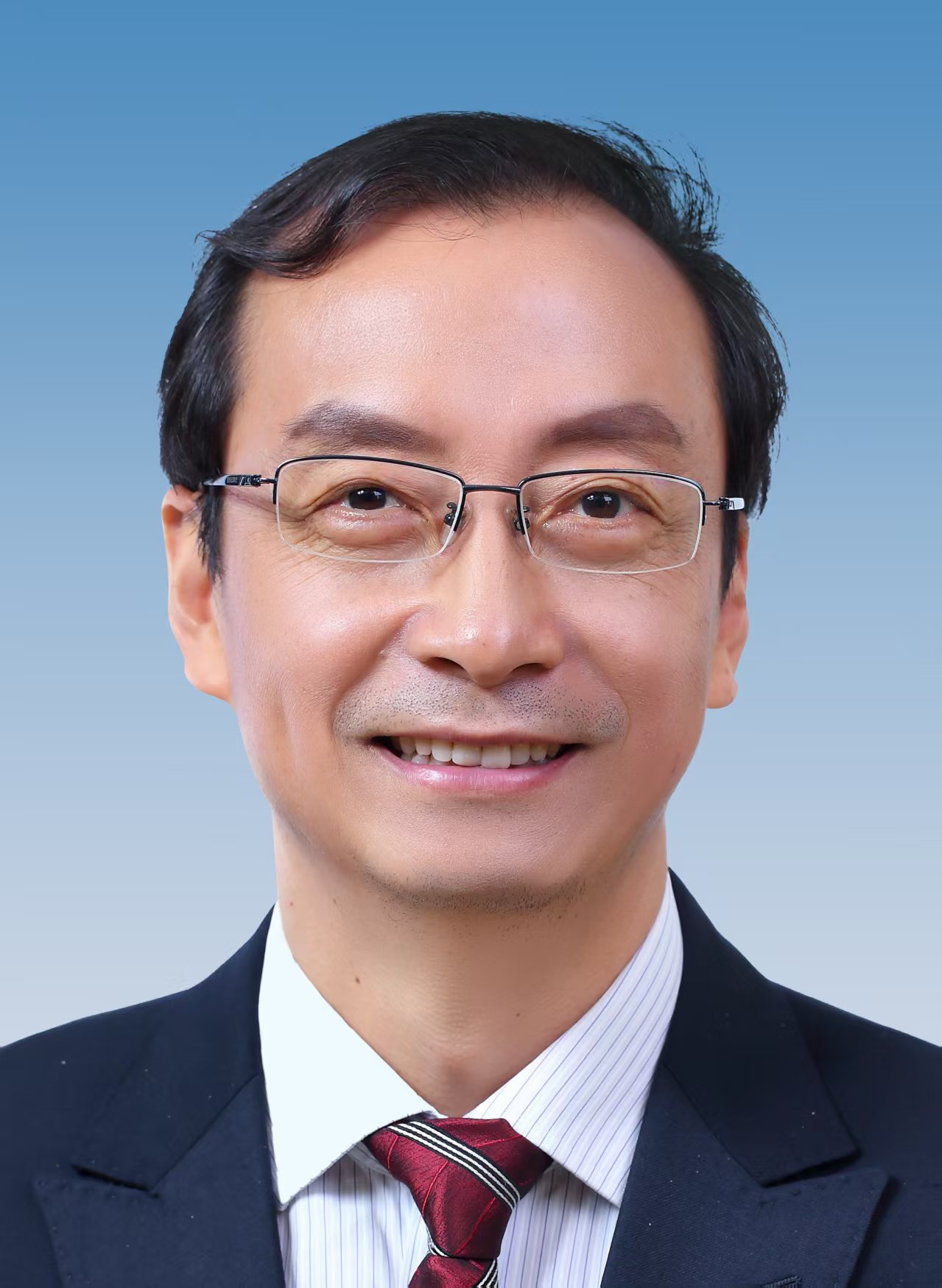 |
Prof. Zongxia Jiao Beihang University, China |
Biography
Zongxia Jiao
, an academician of the Chinese Academy of Engineering, is a professor at the School of Automation Science and Electrical Engineering of Beihang University and director of the Beihang Airborne Systems Innovation Center. He serves as director of the National Key Laboratory of Integrated Aircraft Control, executive director of the Chinese Society of Aeronautics and Astronautics as well as honorary director of its Electromechanical Systems Branch, and executive director of the Chinese Mechanical Engineering Society as well as director of its Fluid Power Transmission and Control Branch. He is also editor-in-chief of both the Chinese and English versions of the Chinese Journal of Aeronautics.
He has long been engaged in research on aeronautical airborne electromechanical systems and flight control systems. His original contributions span electromechanical-hydraulic control theory, core fundamental components, novel-concept aircraft, and advanced testing equipment. He has systematically addressed critical challenges in high-reliability aircraft hydraulics, high-safety braking systems, servo actuation, and aircraft testing, with his achievements applied to multiple major aviation and aerospace projects. He has been named a Highly Cited Researcher by Elsevier for five consecutive years and has received the Ho Leung Ho Lee Prize and the National Medal for Innovation and Dedication. Additionally, he has been awarded two National Technology Invention Awards (Second Class) and one National Scientific and Technological Progress Award (Second Class).
Resilience in Multi-Agent Systems: From Fault Diagnosis to Tolerant Control and Toward a Game-Theoretic Framework
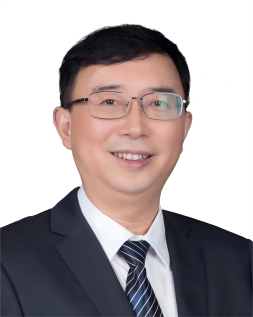 |
Prof. Bin Jiang Nanjing University of Aeronautics and Astronautics, China |
Abstract
In recent years, the growing complexity of multi-agent systems has made them increasingly susceptible to operational faults spanning both individual agent failures and communication disruptions, which directly compromise system stability and safety. Consequently, the demand for resilient multi-agent systems has intensified, driving significant research attention toward integrated fault diagnosis and fault-tolerant control. This talk presents a unified framework for achieving resilience through fault diagnosis, fault-tolerant control and fault-tolerant game control. The fault diagnosis module introduces a distributed nonlinear fault diagnosis design, enhanced by an event-triggered mechanism to improve efficiency and reduce communication load. In the fault-tolerant control module, theoretical advances are synthesized from fully actuated system theory, adaptive methods, and prescribed performance control, enabling robust recovery and sustained cooperation under faults. To further achieve the stability and optimal performance of multi-agent systems, the fault-tolerant game control is developed. Above results are applied to both homogeneous and heterogeneous multi-agent systems, with experimental validation provided through cooperative fault-tolerant control demonstrations in actual unmanned formation platforms.
Biography
Bin Jiang
received the Ph.D. degree in automatic control from Northeastern University, Shenyang, China. He had ever been a Post-Doctoral Fellow, a Research Fellow, an invited Professor, and a Visiting Professor in Singapore, France, USA, and Canada respectively.
He is currently the President of the Nanjing University of Aeronautics and Astronautics,Nanjing, China, and a Chair Professor of the Cheung Kong Scholar Program with the Ministry of Education, He has authored 8 books and over 100 referred international journal articles. His current research interests include intelligent fault diagnosis, fault-tolerant control and their applications to helicopters, satellites, and high-speed trains. He was a recipient of the National Natural Science Award of China. He is an lEEE Fellow, a Fellow of the Asia-Pacific Artificial Intelligence Association (AAlA), a Fellow of the Chinese Association of Automation (CAA), the Chair of Control Systems Chapter in lEEE Nanjing Section, and a member of IFAC Technical Committee on Fault Detection, Supervision, and Safety of Technical Processes. He currently serves as a Senior Editor for International journal of Control, Automation and Systems, and an Associate Editor or an Editorial Board Member for several journals, such as the lEEE Transactions on Cybernetics, lEEE Transactions on Neural Networks and Learning Systems, and lEEE Transactions on Industrial Informatics.
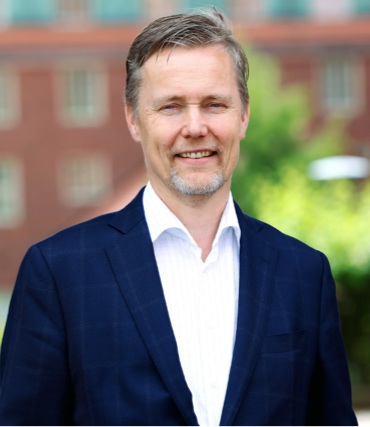 |
Prof. Karl Henrik Johansson KTH Royal Institute of Technology, Sweden |
Biography
Karl H. Johansson is Swedish Research Council Distinguished Professor in Electrical Engineering and Computer Science at KTH Royal Institute of Technology in Sweden and Founding Director of Digital Futures. He earned his MSc degree in Electrical Engineering and PhD in Automatic Control from Lund University. He has held visiting positions at UC Berkeley, Caltech, NTU and other institutions. His research interests focus on networked control systems and cyber-physical systems with applications in transportation, energy, and automation networks. For his scientific contributions, he has received numerous best paper awards and various other distinctions from IEEE, IFAC, and other organizations. He has been awarded Distinguished Professor by the Swedish Research Council, Wallenberg Scholar by the Knut and Alice Wallenberg Foundation, Future Research Leader by the Swedish Foundation for Strategic Research. He has also received the triennial IFAC Young Author Prize, IEEE CSS Distinguished Lecturer, IFAC Outstanding Service Award, and IEEE CSS Hendrik W. Bode Lecture Prize. His extensive service to the academic community includes being President of the European Control Association, IEEE CSS Vice President, and Member of IEEE CSS Board of Governors and IFAC Council. He has served on the editorial boards of Automatica, IEEE TAC, IEEE TCNS and many other journals. He has also been a member of the Swedish Scientific Council for Natural Sciences and Engineering Sciences. He is Fellow of both the IEEE and the Royal Swedish Academy of Engineering Sciences.


